
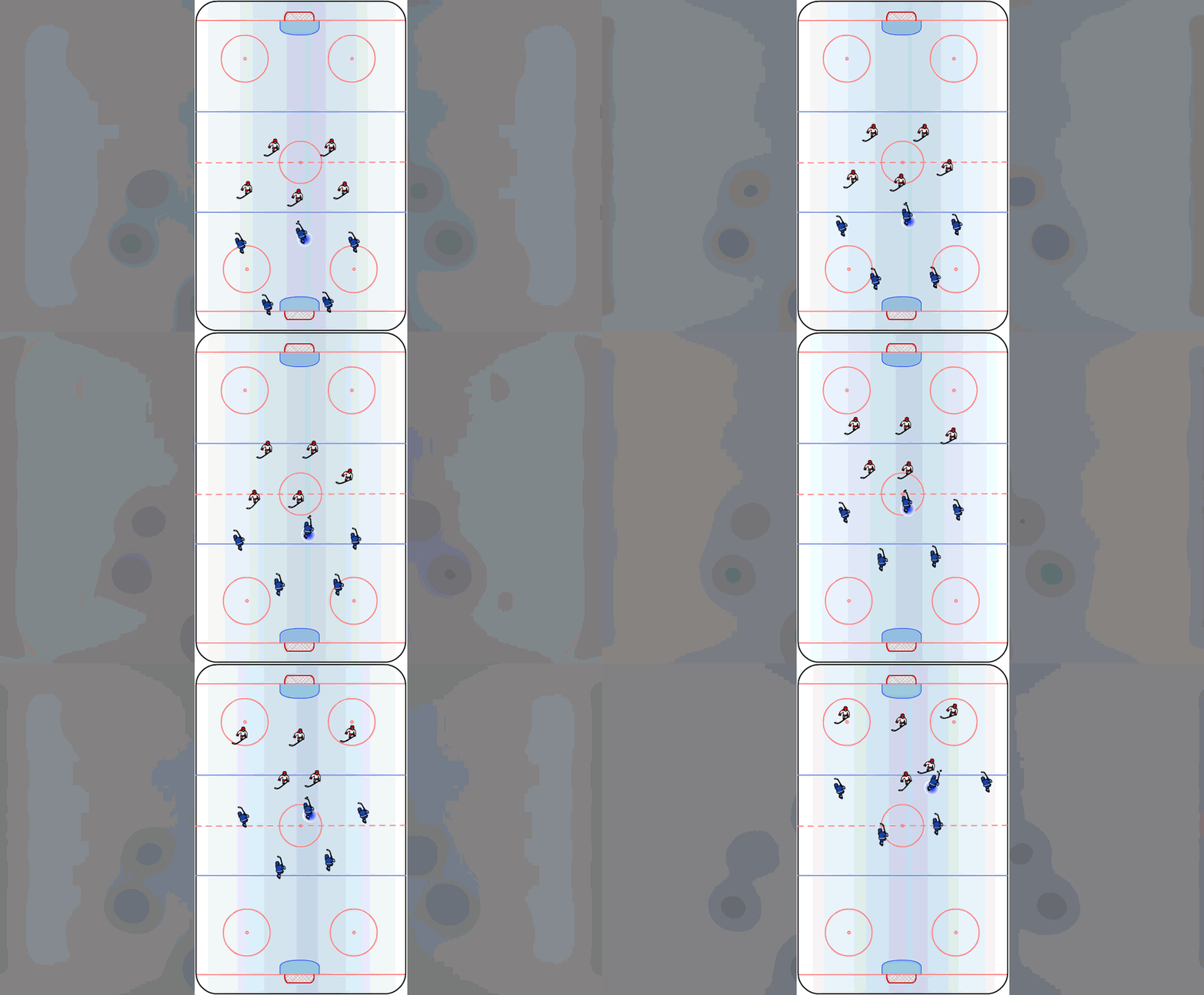
The left wing lock isn't actually a Detroit invention, even though the Red Wings are the team most associated with it. The system was originally developed in Czechoslovakia during the 1970s, built specifically to slow down the dominant Soviet national team of that era. Decades later, it crossed the Atlantic and found a second life in the NHL, thanks to a Detroit assistant coach named Barry Smith.
The basic idea is straightforward: when the team without the puck is defending, the center and right wing forecheck aggressively, trying to drive the play toward the opponent's right side. Meanwhile, the left wing drops back into the neutral zone, essentially becoming a third defenseman. Instead of all three forwards committing to the forecheck, one of them holds a defensive position, clogging the neutral zone and making it much harder for the opposing team to carry the puck through center ice with speed.
Under head coach Scotty Bowman, Detroit began running the lock heavily starting in the 1994-95 season, and the regular-season results were immediate. The Red Wings won the Presidents' Trophy that year for the league's best record, then were even better the following season, finishing just one point short of the NHL record for most points in a season. On paper, it looked unstoppable.
Then the playoffs arrived, and the system's limits showed. In the 1995 Stanley Cup Final, Detroit ran into the New Jersey Devils and head coach Jacques Lemaire, whose own neutral zone trap smothered Detroit's offense and swept the series in four straight games. The irony is hard to miss: one clogged-neutral-zone system had just been beaten by another. Detroit's dominant regular season simply didn't translate, and it took until 1997 for the team to finally break through and win the Stanley Cup, matching their regular-season success with a championship at last. The lock's defense-first mentality also produced one of the era's most beloved units, the Grind Line of Kirk Maltby, Kris Draper, and Darren McCarty, whose entire job was to shut opponents down rather than light the lamp themselves.
So how did other teams eventually solve it? A few approaches proved effective. Speed through the neutral zone before the lock could fully set up was the most direct answer — catching the defense in transition, before the left wing had dropped all the way back, could beat the whole system before it ever formed. Long stretch passes worked for the same reason: rather than trying to carry the puck through a neutral zone deliberately packed with players, a team could throw the puck over the clog entirely to a streaking forward breaking for open ice.
Attacking down the side the system was built to funnel play toward, but doing it with real speed and support rather than a single puck carrier, also created problems for the lock, since the system depended on players holding disciplined positions — speed and traffic together made that discipline much harder to maintain. And since the lock is fundamentally an even-strength system, special teams became a release valve: a team that could draw penalties and convert on the power play didn't have to solve the neutral zone at all.
The most lasting blow to systems like the left wing lock didn't come from any single team's game plan, though. It came from the league itself. When the NHL returned from the 2004-05 lockout, it eliminated the two-line pass restriction, specifically to legalize the long stretch pass as a normal, repeatable play rather than a rare exception. Combined with stricter enforcement of obstruction penalties like hooking and holding, the rule changes did what no single opposing coach ever fully managed: they made the entire style of clogged, neutral-zone defense far harder to sustain across an 82-game season, reshaping the sport into the faster, more open game recognized today.