
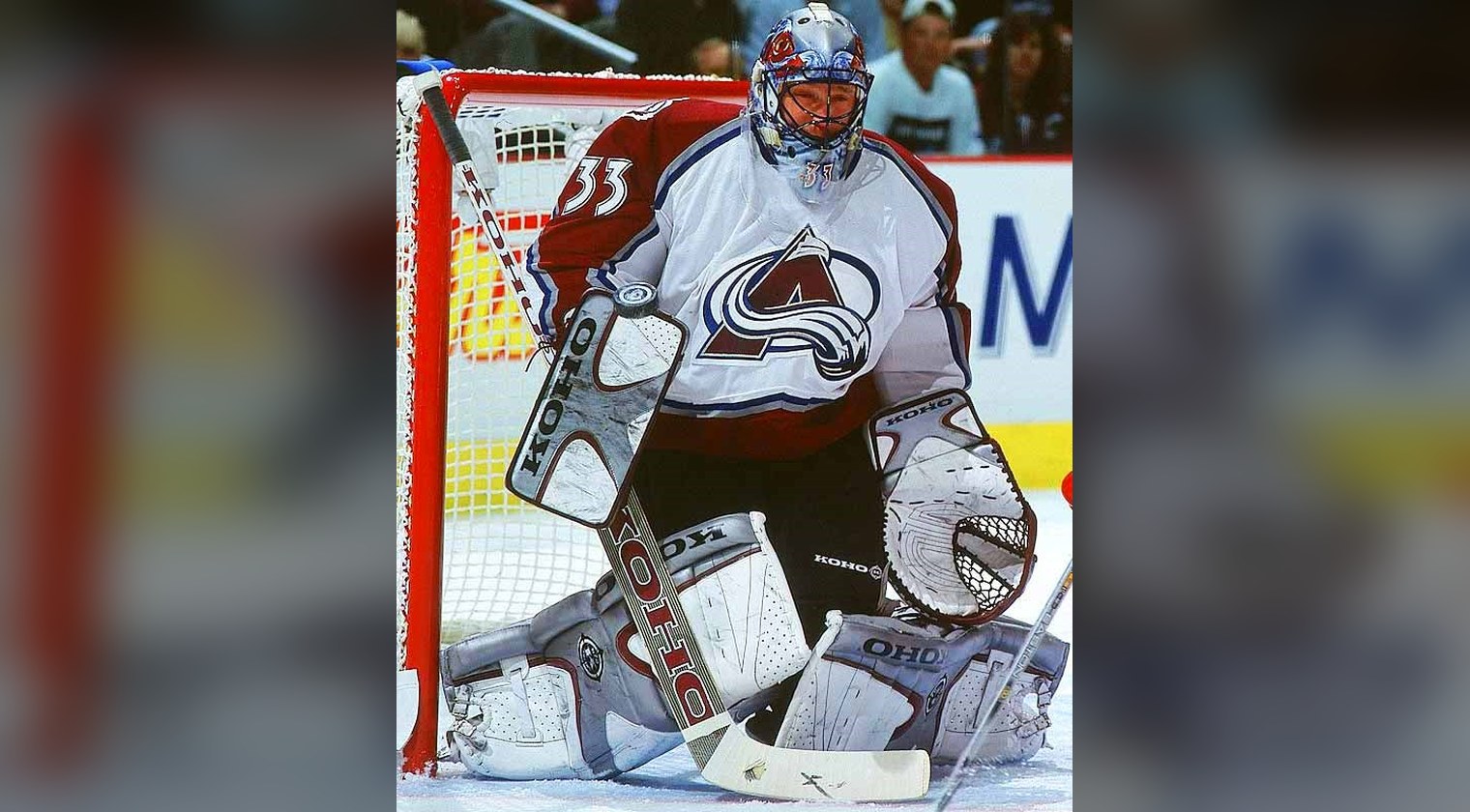
The butterfly is a goaltending stance where the goalie drops to both knees and splays the leg pads outward to seal off the bottom of the net, while keeping the stick, glove, and blocker up to cover higher shots. Dropped correctly, it turns the goalie's body into a wall covering the vast majority of the net's low area — exactly where most shots are actually aimed.
For much of hockey's early history, goaltending was built around staying upright. The dominant "stand-up" style, associated with legends like Glenn Hall and Jacques Plante, relied on skates, positioning, and reflexes, with goalies dropping to the ice only briefly and reactively when a shot demanded it.
Tony Esposito brought a hybrid, more butterfly-leaning approach into the NHL in the 1970s, but it was Patrick Roy, working with goaltending coach François Allaire through the 1980s and 90s, who refined the butterfly into a full, repeatable technique rather than an occasional reaction. Roy won multiple Stanley Cups and Conn Smythe Trophies using it, and other goaltenders took notice of just how effective it was.
Equipment caught up with technique. As leg pads grew larger and better fitted to cover more net when dropped, the butterfly became increasingly efficient at stopping the shots goalies actually face most — low, quick releases rather than high, difficult-to-place ones. By the 2000s, it had become the default style taught to nearly every young goaltender coming up through the sport.
Today, some version of the butterfly is used by virtually every goaltender in the NHL, a lasting testament to how completely Roy's generation reshaped one of hockey's most specialized positions.