
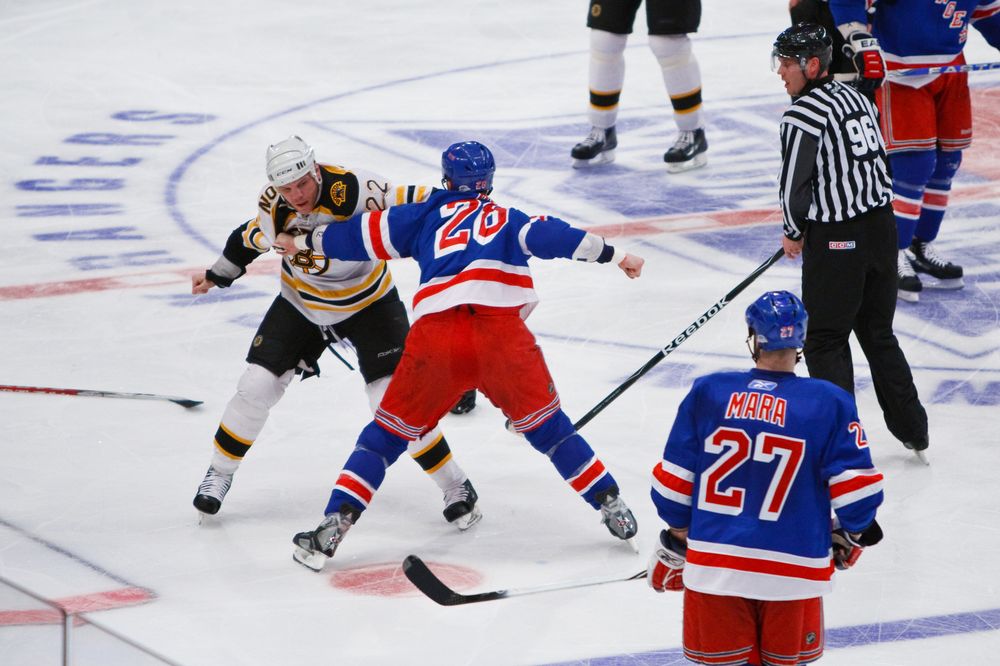
Hockey has always had two sets of rules: the ones printed in the official rulebook, and the unwritten ones players enforce on each other. The latter is often called simply "the code" — a shared, informal understanding of how the game should be played and how players should treat one another on the ice. It predates modern player-safety rules by decades; professional players' own books on the sport, including Rod Gilbert and Brad Park's 1972 instructional book Playing Hockey the Professional Way, have long discussed this code as part of what separates hockey from other sports.
Protect your teammates. This is the foundation the rest of the code is built on. If an opponent targets one of your linemates with a dangerous hit or repeated cheap shots, someone on your team is expected to respond — whether that's a hard, clean check, a battle along the boards, or historically, a fight. A team that doesn't stand up for its own is seen as an easy team to intimidate.
Answer for your actions. The flip side of protecting teammates is accountability. A player who delivers a big, clean hit on an opponent's star player should expect to be challenged by that team's tougher players. Ducking that response, especially while playing the same aggressive style, was traditionally viewed as a serious breach of the code.
Fight fair, or don't fight at all. Fighting has its own code within the code. Both players are expected to drop their gloves and face each other before throwing punches; sucker-punching an unprepared opponent, or piling on a player who's already down, draws contempt from teammates and opponents alike. Mismatched fights — a heavyweight enforcer against a much smaller skill player — are also generally frowned upon and often broken up quickly rather than allowed to continue.
Leave the goaltender alone. Running or crashing into a goalie who isn't playing the puck is treated as one of the clearest violations in the sport. Goaltenders are seen as protected by convention as much as by the actual interference rules, and a team that targets an opposing goalie can expect a physical response the next time the two teams meet.
Don't run up the score. When a game is already well out of reach, the code discourages the leading team from continuing to pour it on — pulling back on pressure, easing off the forecheck, and generally not treating a blowout as an opportunity to humiliate an overmatched opponent.
Shake hands and mean it. After a hard-fought series, especially in the playoffs, players from both teams line up to shake hands regardless of how bitter the competition was. It's one of the code's most visible traditions — a public reset that separates the competition on the ice from respect for the opponent.
The code has evolved alongside the game itself. Rule changes like the instigator penalty, combined with a much greater focus on concussions and player safety, have made some older code traditions (fighting chief among them) far less common than they were in the era Gilbert and Park were writing about. But the underlying idea — that hockey players hold each other accountable for how the game is played, not just what the referees catch — is still very much alive.